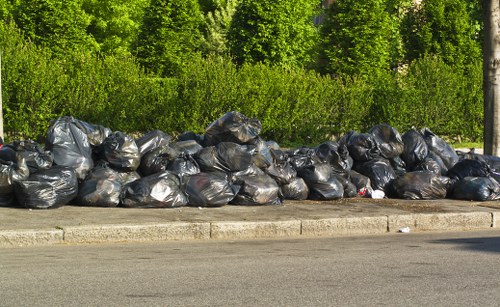
 House Clearance Richmond Upon Thames — Recycling and Sustainability
House Clearance Richmond Upon Thames focuses on a practical, transparent, and eco-conscious approach to clearing properties. Our aim is to transform what many regard as rubbish into a sustainable resource stream. By prioritising reuse, repair and correct disposal we reduce landfill, support local charities and align with the borough's wider environmental commitments. This page explains our recycling and sustainability policy for house clearance in Richmond upon Thames and how a neighbourhood-focused, low-carbon service benefits residents and the local environment.
Our Sustainable Rubbish Area Approach
We operate an eco-friendly waste disposal area model that separates materials at source, sorts on-site where appropriate and chooses transfer routes to maximise recycling rates. Our in-house targets are ambitious and measurable: we aim to divert a minimum of 85% of cleared material from landfill through reuse, recycling and energy recovery. This complements local borough schemes and helps maintain a cleaner, greener Richmond.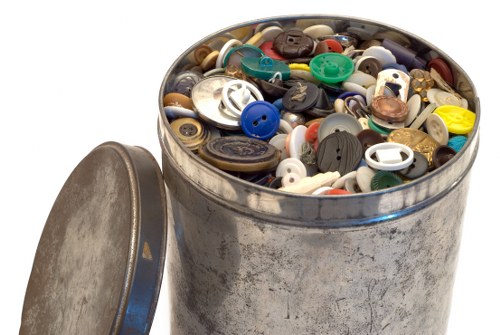 What we recycle includes furniture, timber, metals, glass, paper and card, textiles, white goods, small electrical items and garden arisings. We also handle hazardous materials responsibly: batteries, asbestos-prone items and certain chemicals are segregated and transported to licensed facilities. The borough's approach to waste separation — emphasising food waste collections, kerbside dry recycling and garden waste services — informs our sorting philosophy so that recovered materials can be matched to local processing streams.
Local Transfer Stations and Recycling Centres
We choose local transfer stations and community recycling centres that offer robust recycling streams. Where possible we use sites serving Richmond upon Thames and neighbouring boroughs to shorten haulage distances and reduce emissions. Examples of facilities we work with include the borough recycling centres and nearby transfer hubs in surrounding boroughs, depending on material type and capacity. Prioritising close, accredited centres reduces travel time and ensures materials enter the correct municipal processing chain for reprocessing.Partnerships with Charities and Social Enterprises
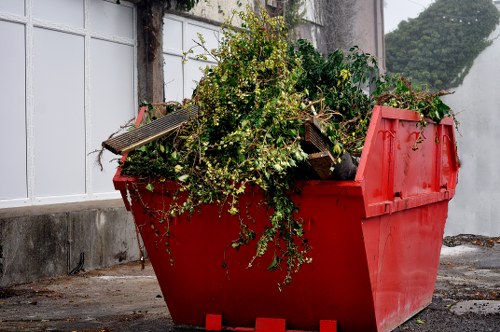 Our Richmond house clearance operations partner with reputable local charities and social enterprises to maximise reuse. Items in good condition — furniture, usable appliances, soft furnishings and surplus building materials — are evaluated for donation. We regularly collaborate with charitable organisations such as furniture reuse charities, community projects and local church groups to extend the life of items and support vulnerable residents. These partnerships both reduce waste and create social value in the borough.
We maintain a clear donation log and coordinate collections so that donations are safe, useful and appropriate for partner organisations. This focused reuse route helps us achieve high recycling percentages and reuses that would otherwise be disposed of. Our teams are trained to spot items suitable for salvage and to ensure donations meet partner standards.
Low-Carbon Vans and Fleet Choices
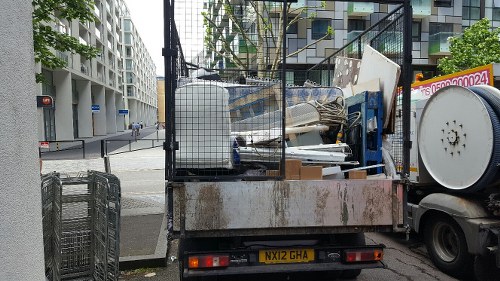
The environmental impact of collection vehicles is a major factor in sustainable rubbish removal. For Richmond upon Thames house clearance jobs we deploy a mix of low-carbon vans, hybrid vehicles and, where feasible, electric vans. We also use route optimisation software to minimise mileage and aggregate loads for efficiency. For inner-borough work we sometimes utilise cargo bikes and smaller low-emission vehicles to reduce local air pollution and congestion.Our vehicle policy includes regular maintenance to preserve fuel efficiency, tyre checks and load planning to avoid unnecessary trips. By lowering operational emissions we support the borough's goals for cleaner air and reduced transport-related carbon, while providing highly reliable clearance services for households and property managers.
Waste separation and borough context: Richmond upon Thames residents are encouraged to separate food, garden and dry recyclables at the kerbside. We mirror this approach during clearances: food-contaminated items are kept separate from recyclable timber or metal, and garden waste is processed into green composting streams where possible. This alignment makes handover to municipal services more seamless and increases the overall recovery rate.
Recycling Percentage Targets and Measurement
We set measurable targets for each clearance: an operational target to recycle or reuse at least 85–90% of all cleared materials, and a contribution to the borough-level ambition of increasing recycling to around 65% by 2030. We track material types, weights and final destinations using digital manifests so diversion rates are verifiable. Regular reporting supports continuous improvement and helps identify opportunities to increase reuse across the borough.To reach these targets we apply a three-tier hierarchy: prevent (reuse and redistribution), prepare for reuse (repair and refurbishment via partners) and recycle (material-specific streams). Materials that cannot be recycled are disposed of via licensed energy recovery facilities rather than landfill where regulations and options allow, further reducing the carbon footprint of end-of-life processing.
 Community and long-term impact: Delivering responsible Richmond upon Thames house clearances means more than moving waste; it means creating an efficient local recycling ecosystem. By combining high diversion targets, trusted transfer station networks, strong charity partnerships and a low-emission fleet, we minimise environmental impact while maximising social benefit. The result is a scalable, repeatable model for sustainable house clearance that residents can rely on.